HVAC and Consultation In Ghana
Why You Need an Ideal HVAC Design and HVAC Consultation Services Before Installing HVAC: A complete guide to choosing the right HVAC system for your home, office, or commercial building in Ghana.
An effective Heating, Ventilation, and Air Conditioning (HVAC) system is essential for maintaining comfortable indoor temperatures, improving air quality, controlling humidity, and reducing electricity consumption. However, installing an air conditioner without proper planning can lead to high energy bills, uneven cooling, frequent breakdowns, and unnecessary maintenance costs.
This is why ideal HVAC design and professional HVAC consultation services should come before installation. Proper planning helps ensure that the system you choose matches your building's requirements, delivers efficient cooling, and provides lasting comfort.
Whether you are constructing a new home, renovating an office, or upgrading an existing air conditioning system, consulting Yehans International, an HVAC professional, can help you make informed decisions and avoid costly mistakes.
What Is HVAC Design?
HVAC design is the process of planning and selecting the appropriate heating, ventilation, and air conditioning equipment for a building.
It involves assessing the building's size, layout, insulation, occupancy, windows, lighting, equipment, ventilation requirements, and local climate conditions before determining the most suitable system.
A good HVAC design: Yehans International considers several important factors, such as:
- Building size: The floor area, ceiling height, and number of rooms influence cooling requirements.
- Cooling load: The amount of heat entering a building determines the capacity of the system required.
- Air distribution: Our expert HVAC technicians ensure that the designed system allows cool air to reach all areas effectively.
- Energy efficiency: Yehans International HVAC technicians select efficient equipment that reduces electricity consumption.
- Ventilation: Appropriate ventilation helps maintain healthy indoor air quality.
- Humidity control: Managing moisture helps improve comfort and reduce the risk of mold.
- Equipment location: Indoor units, outdoor condensers, ducts, and drainage pipes are positioned correctly by our professional designers.
In Ghana, where temperatures can be high and humidity is significant in many locations, these considerations are particularly important. An HVAC system should be designed to cope with local weather conditions while meeting the specific needs of the building. With Yehans International HVAC designers, you need not worry because we deliver beyond expectations.
What Are HVAC Consultation Services?
HVAC consultation services involve seeking professional advice before purchasing or installing an air conditioning or ventilation system.
An HVAC consultant evaluates your building, identifies your cooling needs, recommends suitable equipment, and helps you understand the costs and technical requirements of installation.
A professional consultation typically covers:
- Site inspection: Examining the building and identifying its cooling and ventilation needs.
- Cooling-load assessment: Calculating how much cooling capacity each room requires.
- System selection: Recommending an appropriate HVAC system for the property.
- Energy-efficiency planning: Identifying ways to reduce electricity consumption.
- Installation planning: Determining suitable equipment locations, pipe routes, ductwork, and drainage arrangements.
- Budget preparation: Estimating equipment, installation, and expected operating costs.
- Maintenance planning: Advising on servicing schedules and long-term system care.
The purpose of consultation is to help you invest in a system that works efficiently rather than simply purchasing an air conditioner based on price or appearance.
The Different Types of HVAC Systems and Their Importance in Cooling Rooms
Choosing the right HVAC system is one of the most important decisions in building design. Different systems are suitable for different building sizes, room layouts, cooling requirements, and budgets.
Below are five common types of HVAC systems and how they help cool indoor spaces.
1. Split Air Conditioning Systems
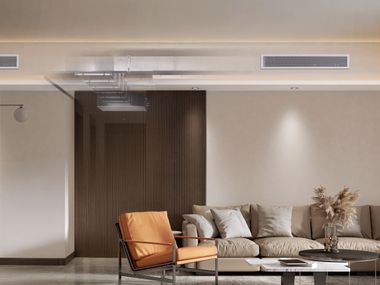
A split air conditioning system consists of an indoor unit and an outdoor unit connected by refrigerant pipes and electrical connections.
The indoor unit absorbs heat from the room, while the outdoor unit releases that heat into the surrounding air.
Importance and benefits:
- Provides effective cooling for individual rooms.
- Suitable for bedrooms, living rooms, small offices, and shops.
- Offers independent temperature control for each room.
- Generally, requires less installation work than a whole-building ducted system.
- Inverter models can adjust their operating speed to help reduce electricity consumption.
Why proper design matters: Yehans International selects the correct capacity, positions the indoor unit for good air distribution, provides proper condensate drainage, and ensures that the outdoor unit has adequate airflow.
An undersized unit may struggle to cool the room, while an oversized unit may cycle inefficiently and fail to control humidity effectively.
2. Ducted HVAC Systems

Ducted HVAC systems distribute conditioned air through a network of ducts concealed in ceilings, walls, or designated service spaces.
A central air handling or conditioning system supplies air through strategically positioned outlets to multiple rooms.
Importance and benefits:
- Can cool several rooms using a coordinated system.
- Provides a neat appearance because most distribution components are concealed.
- Allows careful balancing of airflow between rooms.
- Can be integrated with suitable filtration and ventilation equipment.
- Works well in larger homes, hotels, offices, and commercial buildings.
Why proper design matters: Duct dimensions, airflow rates, insulation, pressure losses, and outlet positions must be calculated correctly. Poorly designed ducts can restrict airflow, create hot spots, increase noise, and waste electricity.
Ducted systems are particularly useful where the building owner wants a consistent cooling solution throughout the property.
3. Cassette Air Conditioning Systems

Cassette air conditioners are usually installed in suspended ceilings, with the main visible panel positioned flush with the ceiling.
Many models distribute air in four directions, helping cool a wider area than a conventional wall-mounted unit when appropriately positioned.
Importance and benefits:
- Distributes cool air across larger open spaces.
- Saves wall space.
- Provides a clean, professional appearance.
- Is suitable for offices, conference rooms, shops, restaurants, and reception areas.
- Can help reduce uneven temperatures when the equipment is correctly selected and installed.
Why proper design matters: The consultant must check ceiling space, structural support, drainage, maintenance access, and the room's layout. The unit should be positioned so that furniture, partitions, and other obstacles do not interfere with airflow.
Cassette systems are especially useful in commercial spaces where appearance and broad air distribution are important.
4. Packaged HVAC Units

A packaged HVAC unit houses most or all of its principal cooling components in a single enclosure. Depending on the design, it may be installed on a roof, on a prepared outdoor platform, or in another suitable location.
Conditioned air is often distributed through ducts.
Importance and benefits:
- Provides cooling for larger spaces.
- Can simplify equipment arrangement by combining major components in one unit.
- Is useful for some commercial buildings, halls, retail spaces, and offices.
- Can reduce the need for multiple separate outdoor units.
- Allows servicing to be concentrated around a designated equipment location.
Why proper design matters: The building must have suitable structural support, sufficient outdoor airflow, appropriate duct connections, and safe maintenance access. The consultant must also assess noise, weather exposure, drainage, and electrical requirements.
Packaged systems can be effective for commercial cooling when the building's cooling load and layout suit the equipment.
5. VRF/VRV Air Conditioning Systems

Variable Refrigerant Flow (VRF) systems, also known as Variable Refrigerant Volume (VRV) systems, use a refrigerant circuit to serve multiple indoor units from one or more outdoor units.
Depending on the system design, different indoor units can operate at different capacities to meet the needs of individual rooms or zones.
Importance and benefits:
- Offers flexible temperature control across multiple rooms.
- Is suitable for hotels, large houses, offices, and multi-zone commercial buildings.
- Can reduce energy consumption under suitable operating conditions.
- Requires less space for conventional ductwork than many central ducted systems.
- Offers flexible installation options for buildings with different room layouts.
Why proper design matters: VRF/VRV systems require careful equipment selection, refrigerant-pipe design, capacity planning, controls configuration, and installation by appropriately trained technicians.
They can be a good investment for buildings with varied cooling needs, but the initial cost, technical complexity, and maintenance requirements should be evaluated before installation.
Why an Ideal HVAC Design Is Important Before Installation
An HVAC system is a long-term investment. Proper design helps ensure that the equipment delivers the required performance without unnecessary energy consumption or avoidable operating problems.
4.1 It Ensures the Correct Cooling Capacity
Every room has a different cooling requirement.
For example, a bedroom with limited sunlight may need a different cooling capacity from a glass-fronted office with computers, multiple occupants, and direct afternoon sunlight.
Yehans International HVAC designers calculate the cooling load, using factors such as:
- Room dimensions and ceiling height.
- Number of occupants.
- Sunlight entering through windows.
- Roof and wall insulation.
- Heat generated by lighting and electrical equipment.
- Outdoor temperature and humidity.
- Ventilation and fresh-air requirements.
This assessment helps determine the appropriate equipment capacity.
The benefit: You are less likely to purchase a system that struggles to cool the room or one that is unnecessarily large and expensive to operate.
4.2 It Helps Reduce Electricity Bills
Air conditioning can contribute significantly to electricity consumption, particularly in buildings where cooling operates for many hours each day.
An ideal HVAC design considers equipment efficiency, room usage, control systems, insulation, and airflow.
Practical energy-saving measures by Yehans International includes:
- Selecting appropriately sized, energy-efficient equipment.
- Using inverter technology where suitable.
- Improving roof insulation and reducing unwanted heat gain.
- Sealing leaks in ductwork.
- Using programmable or smart thermostats where compatible.
- Separating areas with different cooling schedules into suitable zones.
- Maintaining clean filters and heat-exchange coils.
The benefit: A well-designed system can deliver the required comfort with less wasted energy. Actual savings depend on the equipment, building, climate, occupancy, and operating habits. Yehans International takes all these into consideration before installing.
4.3 It Provides Even Cooling Throughout the Building
Have you ever entered a room where one corner feels cold while another remains uncomfortably warm?
This can happen when an air conditioner is poorly positioned, airflow is restricted, or the system has not been properly balanced.
HVAC design helps determine the best locations for indoor units, supply-air outlets, return-air grilles, and thermostats.
The benefit: Proper air distribution improves comfort and helps prevent persistent hot and cold spots.
4.4 It Improves Indoor Air Quality
HVAC systems can help maintain healthier indoor environments when designed with appropriate filtration, ventilation, and humidity control.
Yehans International considers how outdoor air enters the building, how stale air is removed, and what filtration is needed for the intended space.
This is important in homes, offices, schools, hotels, and healthcare environments.
The benefit: A properly planned system by Yehans International can help reduce airborne particles like Flu from being contracted by everyone in a particular space and manage indoor pollutants when the correct equipment and maintenance practices are used.
It is important to remember that recirculating air conditioning alone does not necessarily provide sufficient fresh air. Ventilation must be considered separately where required.
4.5 It Helps Control Humidity
In humid environments, including many parts of Ghana, controlling moisture is an important part of indoor comfort.
An air conditioner removes some moisture as it cools the air. However, its ability to dehumidify depends on the equipment, operating conditions, and how the system is sized and controlled.
An oversized unit may cool a room quickly and shut off before removing enough moisture.
The benefit: Appropriate design and humidity control can improve comfort and help reduce conditions that encourage mold growth.
4.6 It Reduces Maintenance Problems and Extends Equipment Life
Poor installation can cause problems such as restricted airflow, refrigerant leaks, blocked drainage, excessive vibration, and electrical faults.
Professional HVAC planning by Yehans International helps establish appropriate installation requirements and allows sufficient access for future servicing.
The benefit: Correct design and installation, combined with regular maintenance, can reduce avoidable breakdowns and help extend equipment life.
4.7 It Helps You Budget Accurately
An HVAC project involves more than buying an air conditioner.
Additional expenses may include electrical upgrades, refrigerant piping, ductwork, insulation, drainage, ventilation equipment, mounting structures, controls, and installation labour.
A consultation helps identify these requirements before work begins.
The benefit: You can compare options, plan your budget, and reduce the risk of unexpected installation costs.
The HVAC Design and Consultation Process: Step by Step
Before installing an HVAC system, follow this process to ensure the project is properly planned.
Step 1: Initial consultation
Discuss your cooling needs, budget, preferred temperature range, building use, and operating hours with Yehans International Gh. Ltd.
Step 2: Site inspection
Yehans International will inspect the building, including room dimensions, ceiling heights, windows, roof conditions, insulation, and available installation locations.
Step 3: Cooling-load calculation
Yehans International will provide a suitable calculation to establish the cooling capacity required for each room or zone. This is more reliable than selecting equipment using floor area alone.
Step 4: System recommendation
Yehans International will compare suitable options, such as split air conditioners, ducted systems, cassette units, packaged units, and VRF/VRV systems.
Step 5: HVAC design preparation
Depending on the project, the design may include equipment schedules, duct layouts, refrigerant-pipe routes, ventilation provisions, electrical requirements, drainage details, and control arrangements.
Step 6: Cost estimation
The project budget is prepared by Yehans International Gh. Ltd, and covers equipment, materials, installation, and anticipated operating and maintenance costs.
Step 7: Professional installation
Yehans International will install the system according to the approved design and the manufacturer's instructions, so there’s no need to worry about any future faults.
Step 8: Testing and commissioning
The completed installation is checked to confirm that the system operates correctly. Relevant checks include airflow, temperature performance, drainage, controls, electrical safety, and refrigerant-system integrity.
Step 9: Handover and maintenance guidance
The building owner receives operating instructions and advice on filter cleaning, scheduled servicing, and identifying potential problems from our expert HVAC Technicians.
Following these steps helps establish a reliable foundation for long-term HVAC performance.
Important HVAC Design Considerations for Buildings in Ghana
Ghana's climate makes careful HVAC planning particularly important for homes, offices, hotels, shops, and other commercial properties.
Before installing an HVAC system, consider the following factors.
|
Design consideration |
Why it matters |
|
Outdoor temperature |
Affects the cooling capacity required to maintain comfortable indoor conditions. |
|
Humidity |
Influences dehumidification requirements and indoor comfort. |
|
Roof insulation |
Helps reduce heat entering the building through the roof. |
|
Window placement |
Large windows and direct sunlight can increase cooling loads. |
|
Electrical supply |
Equipment must be compatible with the available electrical supply and circuit capacity. |
|
Ventilation |
Helps provide appropriate fresh air and remove stale indoor air. |
|
Outdoor-unit placement |
Adequate clearance and airflow help equipment reject heat effectively. |
|
Drainage |
Proper condensate drainage helps prevent water leaks and damage. |
|
Maintenance access |
Makes routine servicing and repairs easier. |
|
Equipment efficiency |
Affects electricity consumption and long-term running costs. |
Should You Choose the Cheapest HVAC System?
Not necessarily.
A low purchase price does not always mean the lowest overall cost. A cheaper system may consume more electricity, require more maintenance, or fail to meet your cooling requirements.
When comparing HVAC systems, Yehans International considers the total cost of ownership to give you nothing but the best HVAC design, including:
- Initial equipment and installation costs.
- Expected electricity consumption.
- Routine maintenance expenses.
- Availability of spare parts and technical support.
- Expected service life.
- Warranty conditions.
Why You Have to Choose Yehans International as a Reliable HVAC Consultant
Relevant experience: We have experience in buildings similar to yours with decades of excellent designs.
Technical competence: Our professional technicians calculate the cooling loads and determine equipment capacity for a particular space.
Clear documentation: We provide a written proposal explaining the recommended system, design requirements, equipment specifications, and estimated costs.
Energy-efficiency knowledge: We clearly state how the proposed system will manage energy consumption and maintain comfort.
Installation quality: Yehans International follows the manufacturer's installation instructions and applicable electrical and building requirements.
After-sales support: We provide a 1-year warranty, routine servicing, and repair support.
Conclusion: Design First, Install Second
An HVAC system is an important investment in the comfort, functionality, and energy performance of your property.
Whether you are installing air conditioning in a residential building, an office, a hotel, or a commercial facility, proper HVAC design and professional consultation by Yehans International should always come before installation.
The right approach helps you select suitable equipment, achieve effective room cooling, improve airflow, manage humidity, maintain indoor air quality, and reduce unnecessary operating expenses.
It also helps prevent common problems associated with poor equipment selection and improper installation.
Before purchasing an air conditioner, take the time to assess your building's needs and consult a qualified HVAC professional.
Remember: The goal is not simply to install an air conditioner. It is to create a comfortable, healthy, energy-efficient indoor environment that serves you well for years to come.
Are you planning to install an HVAC system in your home, office, hotel, or commercial building in Ghana? Start with a professional HVAC consultation with Yehans International and a design tailored to your building's specific needs.
For further information, visit our website at www.yehansinternational.com or our showroom at 75 Boundary Road, East Legon, American House, or contact us on 024 431 9079, 054 434 2319, or 054 434 0680.