
Bridges and Steel Structures.
BRIDGES AND STEEL STRUCTURES THAT PAVE THE WAY TO PROSPERITY.
Introduction
Bridges and steel structures are essential components of modern infrastructure and economic development. They play a significant role in connecting communities, facilitating transportation, supporting industrial activities, and improving access to essential services. From small pedestrian bridges to massive highway bridges, these structures make it possible for people, vehicles, and goods to cross rivers, valleys, railway lines, and other physical obstacles safely. Yehans Int’l Gh. Ltd. is a highly reputable steel bridge construction company in Ghana that constructs durable and long-span bridges that are able to stand the test of time.
Steel has become one of the most important materials used in bridge construction because of its exceptional strength, durability, flexibility, and ability to support heavy loads over long distances. Steel structures are also widely used in commercial buildings, warehouses, factories, industrial facilities, stadiums, and other large construction projects.
In countries such as Ghana, where road transportation is essential for economic activities, bridges are particularly important in connecting rural communities to urban centers, improving access to markets, reducing travel time, and supporting national development.
Understanding the different types of bridges, their construction materials, and their applications helps property developers, engineers, contractors, and government institutions make informed infrastructure decisions.
What Are Bridges and Steel Structures?
A bridge is an engineered structure constructed to provide a passage over physical obstacles such as rivers, streams, valleys, roads, railway lines, and other transportation routes.
Bridges are designed to carry different types of loads, including:
- Pedestrians.
- Cars and commercial vehicles.
- Heavy-duty trucks.
- Trains and railway equipment
- Industrial machinery and specialized equipment.
Steel structures, on the other hand, are buildings or construction components made primarily from steel members such as beams, columns, plates, trusses, and supporting frames.
Steel is particularly useful in construction because it offers a high strength-to-weight ratio. This means it can support substantial loads without requiring excessively heavy structural members.
When steel is used in bridge construction, it provides the strength and structural stability needed to span long distances while maintaining an efficient and relatively lightweight design.
Different Types of Bridges and Their Importance
There are several types of bridges, and each is designed to serve a particular purpose depending on the geographical location, distance to be covered, expected traffic, environmental conditions, and construction requirements.
Below are some of the most common types of bridges used in modern construction that Yehans Int’l Gh. Ltd. has great expertise in:
- Beam Bridges

A beam bridge is one of the simplest and most common types of bridges. It consists of horizontal beams supported by piers or columns at both ends or at intermediate points.
Beam bridges are commonly constructed using reinforced concrete, structural steel, or a combination of both materials.
Importance and areas of application:
- Used for constructing bridges over small rivers, streams, and drainage channels.
- Suitable for short-distance road crossings.
- Useful for connecting communities separated by small water bodies.
- Commonly used for pedestrian walkways and railway crossings.
- Can be constructed along highways to provide access across minor obstacles.
Why beam bridges are important:
They are relatively straightforward to construct, cost-effective for shorter spans, and easy to maintain. Steel beam bridges are particularly useful where construction speed and structural strength are important.
- Arch Bridges

Arch bridges are designed with a curved structural element that transfers the weight of the bridge towards the supporting structures at both ends, known as abutments.
The curved design allows the bridge to distribute loads efficiently, making it suitable for locations requiring strong and durable structures.
Importance and areas of application:
- Suitable for crossing deep valleys and rivers.
- Useful in mountainous and hilly environments.
- Appropriate for locations where strong foundations can be established at both ends.
- Can serve as major road and pedestrian crossings.
- Their architectural appearance makes them attractive for tourism and urban development.
Why arch bridges are important:
Their structural design allows them to carry substantial loads while providing long-term stability. Steel arch bridges can also cover considerable distances and create attractive architectural landmarks.
3. Truss Bridges

Truss bridges are constructed using interconnected steel members arranged in triangular patterns. These triangles distribute loads across the structure, providing strength and stability.
They are among the most recognized steel bridge designs and are commonly used for railway crossings, highways, and industrial transportation.
Importance and areas of application:
- Used for crossing wide rivers and railway lines.
- Suitable for transporting heavy vehicles and industrial equipment.
- Useful in areas where long spans are required.
- Ideal for locations where strong structural support is necessary.
- Can be used for temporary and permanent bridge installations.
Why truss bridges are important:
The triangular arrangement of steel members provides excellent structural strength while making efficient use of construction materials. They are particularly valuable for locations that require bridges capable of supporting heavy traffic.
- Suspension Bridges

Suspension bridges are supported by large main cables suspended between tall towers. The bridge deck hangs from these cables through smaller vertical cables known as suspenders.
They are particularly suitable for crossing very wide rivers, deep valleys, and large bodies of water.
Importance and areas of application:
- Used for crossing wide rivers and large water bodies.
- Suitable for long-distance highway connections.
- Useful in mountainous regions and deep valleys.
- Can connect islands to mainland transportation networks.
- Suitable for locations where constructing multiple supporting piers in water is difficult.
Why suspension bridges are important:
They can cover extremely long distances without requiring numerous supporting columns beneath the bridge deck. This makes them valuable for major transportation networks and locations with challenging geographical conditions.
5. Cable-Stayed Bridges

Cable-stayed bridges are supported by strong cables connected directly from one or more towers to the bridge deck. The cables are arranged in different patterns, including fan and harp configurations.
Unlike suspension bridges, cable-stayed bridges do not rely on large main cables running between towers.
Importance and areas of application:
- Used for crossing wide rivers and major waterways.
- Suitable for major highways and expressways.
- Useful in urban areas where long-span bridges are needed.
- Ideal for locations where constructing several supporting piers would obstruct water or traffic movement.
- Can serve as major transportation landmarks.
Why cable-stayed bridges are important:
They provide an effective balance between structural strength, construction efficiency, and architectural appearance. Their design also makes them suitable for major infrastructure projects requiring medium to long spans.
6. Cantilever Bridges

Cantilever bridges use structural elements that extend horizontally from supporting piers without requiring continuous support beneath their projecting sections.
They are often constructed using steel or reinforced concrete.
Importance and areas of application:
- Suitable for crossing deep rivers and valleys.
- Useful where constructing temporary supports beneath the bridge is difficult.
- Can be used in locations with strong water currents.
- Suitable for railway and highway transportation.
- Useful in areas where construction activities must minimize interference with existing traffic or waterways.
Why cantilever bridges are important:
They let engineers build bridges over challenging terrain and waterways without placing many temporary supports beneath the structure.
7. Girder Bridges
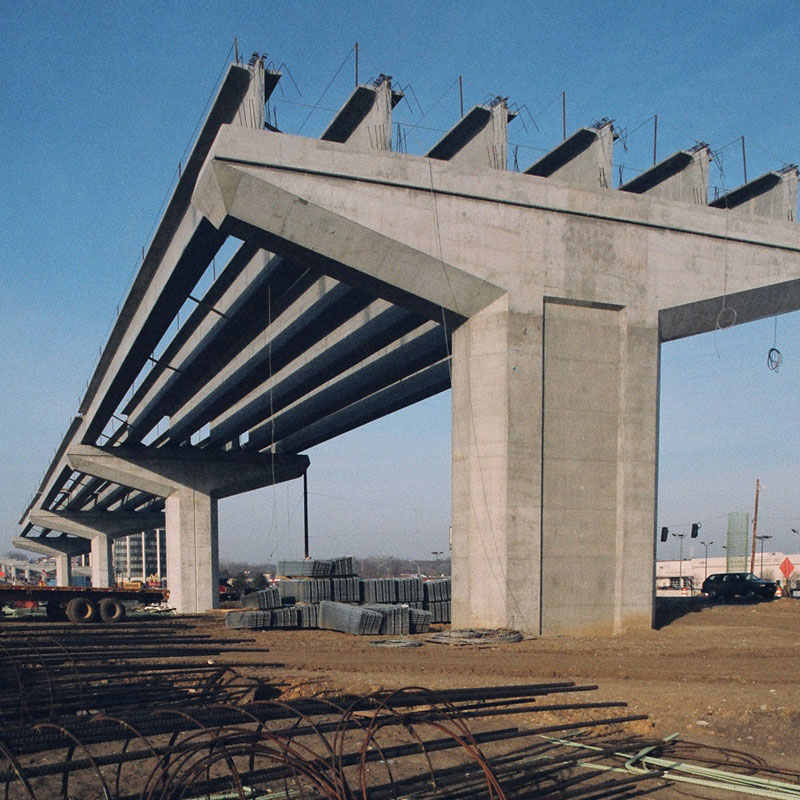
Girder bridges use large horizontal structural members called girders to support the bridge deck and transfer loads to piers and abutments.
They can be constructed using steel plate girders, rolled steel sections or reinforced concrete.
Importance and areas of application:
- Commonly used for highway bridges.
- Suitable for railway crossings.
- Useful for constructing bridges over drainage systems and rivers.
- Appropriate for urban road infrastructure.
- Suitable for industrial transportation routes.
Why girder bridges are important:
Steel girder bridges offer excellent load-bearing capacity and are relatively adaptable to different construction requirements. They are particularly useful for highways and transportation networks where strength and durability are essential.
Types of Steel Structures Used in Bridge Construction
Steel is not limited to one type of bridge. It is used in different structural arrangements depending on the engineering requirements of a project.
Some common steel structures include:
- Steel Trusses: These consist of interconnected steel members arranged in triangular patterns. They provide excellent strength and are commonly used in railway bridges, highway bridges, and industrial structures.
- Steel Plate Girders: These are fabricated structural members made by joining steel plates together. They are useful for bridges requiring strong supporting beams and longer spans.
- Steel Box Girders: These are hollow structural sections, usually rectangular or trapezoidal, designed to provide high bending and torsional resistance. They are widely used in modern highway and curved bridge construction.
- Steel Portal Frames: These are rigid structural frames made from steel columns and beams. Although more commonly used in warehouses and industrial buildings, they can also be incorporated into specialized bridge structures.
- Steel Space Frames: These are three-dimensional arrangements of interconnected steel members. They provide structural support over large areas and are commonly used in stadium roofs, terminals, and large-span buildings.
The Importance of Bridges in Specific Locations
The importance of a bridge depends largely on the geographical and economic conditions of the area where it is constructed.
A well-designed bridge can transform communities by improving accessibility, reducing transportation costs, and creating opportunities for economic development.
Here are some specific areas where bridges are particularly important.
- Bridges Across Rivers and Waterways
Communities separated by rivers and waterways often experience transportation difficulties, especially during rainy seasons when water levels rise.
Constructing bridges across these areas helps:
- Connect communities on opposite sides of rivers.
- Improve access to schools, hospitals, and markets.
- Reduce dependence on boats and ferries.
- Support the transportation of agricultural produce.
- Improve emergency access during floods and other disasters.
Importance in Ghana: Bridges across rivers and waterways can help connect rural communities to major towns and commercial centers. They also improve the movement of agricultural products from farming communities to markets.
- Bridges in Urban Areas and Busy Cities
In busy cities, traffic congestion is a major challenge. Bridges, flyovers, and elevated road structures help separate different traffic routes and improve transportation efficiency.
Their importance includes:
- Reducing traffic congestion at busy intersections.
- Allowing vehicles to cross over other roads without interrupting traffic.
- Improving transportation between commercial and residential areas.
- Providing safer pedestrian crossing points.
- Supporting the expansion of urban infrastructure.
In cities such as Accra and Kumasi, properly planned bridges and flyovers can contribute to improved traffic management and urban development.
- Bridges in Rural and Agricultural Communities
Rural communities depend heavily on roads and bridges to transport agricultural products, access healthcare, and participate in economic activities.
During heavy rainfall, some rural roads become inaccessible because rivers and streams overflow their banks.
Bridges help to:
- Improve access to farms and agricultural processing centers.
- Enable farmers to transport produce to markets.
- Connect isolated villages to nearby towns.
- Reduce travel time and transportation costs.
- Improve access to schools, healthcare, and other public services.
Why they matter: A strategically located rural bridge can improve the livelihoods of thousands of people by making transportation more reliable throughout the year.
- Bridges Across Valleys and Mountainous Areas
Mountainous areas and deep valleys often make road construction difficult because of steep slopes and uneven terrain.
Bridges provide a practical solution by allowing roads and railway lines to cross these obstacles without requiring extensive ground-level construction.
Their importance includes:
- Connecting settlements separated by mountains.
- Reducing the distance between transportation routes.
- Improving access to remote communities.
- Supporting tourism and commercial activities.
- Reducing the need for complicated road diversions.
- Bridges for Railway Transportation
Railway bridges are specially designed to support the weight and dynamic forces generated by moving trains.
They are commonly constructed using steel trusses, plate girders, and other heavy-duty structural systems.
Their importance includes:
- Supporting the movement of passenger trains.
- Facilitating the transportation of minerals and industrial materials.
- Connecting railway networks across rivers and valleys.
- Improving the efficiency of freight transportation.
- Supporting national and international trade.
- Bridges in Industrial and Commercial Areas
Industrial areas require strong transportation infrastructure to support the movement of heavy equipment, raw materials, and finished products.
Specialized steel bridges can also be used to carry conveyor systems, pipelines, and utility services between industrial facilities.
Their importance includes:
- Supporting the movement of heavy-duty commercial vehicles.
- Connecting warehouses, factories, and production facilities.
- Carrying industrial conveyor systems.
- Supporting pipelines and utility installations.
- Improving the efficiency of industrial operations.
Advantages of Using Steel in Bridge Construction
Steel is one of the most preferred materials for modern bridge construction because of its outstanding structural properties.
Some of its major advantages include:
- High Strength and Load-Bearing Capacity
Steel can withstand substantial loads, making it suitable for bridges carrying heavy vehicles, trains, and industrial equipment. - Durability and Long Service Life
When properly designed, fabricated, protected, and maintained, steel bridges can serve for many decades. - Faster Construction
Steel components can be manufactured and assembled off-site before being transported to the construction location. This can reduce construction time and minimize disruption to traffic. - Ability to Cover Long Distances
Steel is suitable for constructing long-span bridges, including suspension bridges, cable-stayed bridges, and large truss bridges. - Flexibility in Design
Steel can be fabricated into different shapes and sizes, allowing engineers to develop bridge designs that meet specific geographical and structural requirements. - Recyclability
Steel can be recycled and reused, making it a valuable material for sustainable construction. - Easy Expansion and Modification
Depending on the original design, steel structures can be modified, strengthened, or extended to accommodate changing transportation needs.
Yehans International Considers These Important Factors Before Constructing a Steel Bridge
Building a bridge requires careful planning, professional engineering expertise with Yehans International Gh. Ltd., and the selection of appropriate construction materials.
The following factors are considered before construction:
- Location and geographical conditions: Our engineers assess the terrain, soil conditions, river depth, and surrounding environment before selecting a bridge design.
- Expected traffic: The bridges are designed to accommodate the expected number and types of vehicles, pedestrians, or trains.
- Load-bearing capacity: Structural calculations are conducted by our engineers for permanent loads, moving traffic, wind, temperature changes, and other relevant forces.
Quality of steel: High-quality structural steel with appropriate mechanical properties are used by our engineers.
- Corrosion protection: Steel bridges exposed to moisture, rainfall, and coastal environments are appropriately coated with protective coatings or galvanizing systems.
- Foundation design: Strong foundations are essential for transferring structural loads safely into the ground, so we make sure to achieve that.
- Drainage systems: Yehans International ensures that proper drainage systems are constructed to prevent water accumulation, which can accelerate corrosion and damage bridge components.
- Regular inspection: Our professional engineers regularly conduct structural inspections to identify cracks, corrosion, loose connections, and other defects.
For projects in Ghana, our certified engineers consider applicable Ghanaian building and infrastructure regulations, relevant Ghana Standards Authority requirements, and the requirements for roads and infrastructure.
Yehans International complies with appropriate standards to ensure that bridges are structurally sound, safe for public use, and capable of performing under the environmental and traffic conditions for which they were designed.
These are maintenance practices of Yehans International After Constructing Steel Bridges
Even the strongest steel bridge requires regular maintenance to preserve its structural integrity.
Maintenance is particularly important in tropical environments such as Ghana, where heavy rainfall, humidity, and coastal conditions can contribute to corrosion.
Some essential maintenance activities include:
- Inspecting steel beams, columns, and structural connections.
- Removing rust and applying protective coatings where necessary.
- Checking bolts, welds, and other connection points.
- Inspecting bridge foundations and supporting piers.
- Maintaining drainage systems to prevent water accumulation.
- Checking expansion joints and bridge bearings.
- Repairing damaged protective coatings.
- Monitoring structural movement and signs of fatigue.
Regular inspections help identify problems early, reduce expensive repairs, and extend the service life of the bridge.
Conclusion
Bridges and steel structures are fundamental to the development of modern transportation networks, commercial activities, and industrial infrastructure. From beam bridges and arch bridges to truss, suspension, cantilever, and cable-stayed bridges, each design serves a particular purpose depending on the location, structural requirements, and intended use.
Steel remains one of the most reliable construction materials because of its strength, flexibility, durability, and ability to support heavy loads over long distances.
For Ghana and other developing economies, investing in properly designed bridges is essential for connecting rural communities, improving urban transportation, supporting agriculture, and facilitating industrial development. Yehans International Ghana Ltd is your number 1 go-to for all durable and low -maintenance steel bridges anywhere in the world.
A well-designed steel bridge is more than a transportation structure; it is an investment in connectivity, economic growth, public safety and sustainable national development.
For further information, visit our website at www.yehansinternational.com or our showroom at 75 Boundary Road, East Legon, American House, or contact us on 024 431 9079, 054 434 2319, or 054 434 0680.